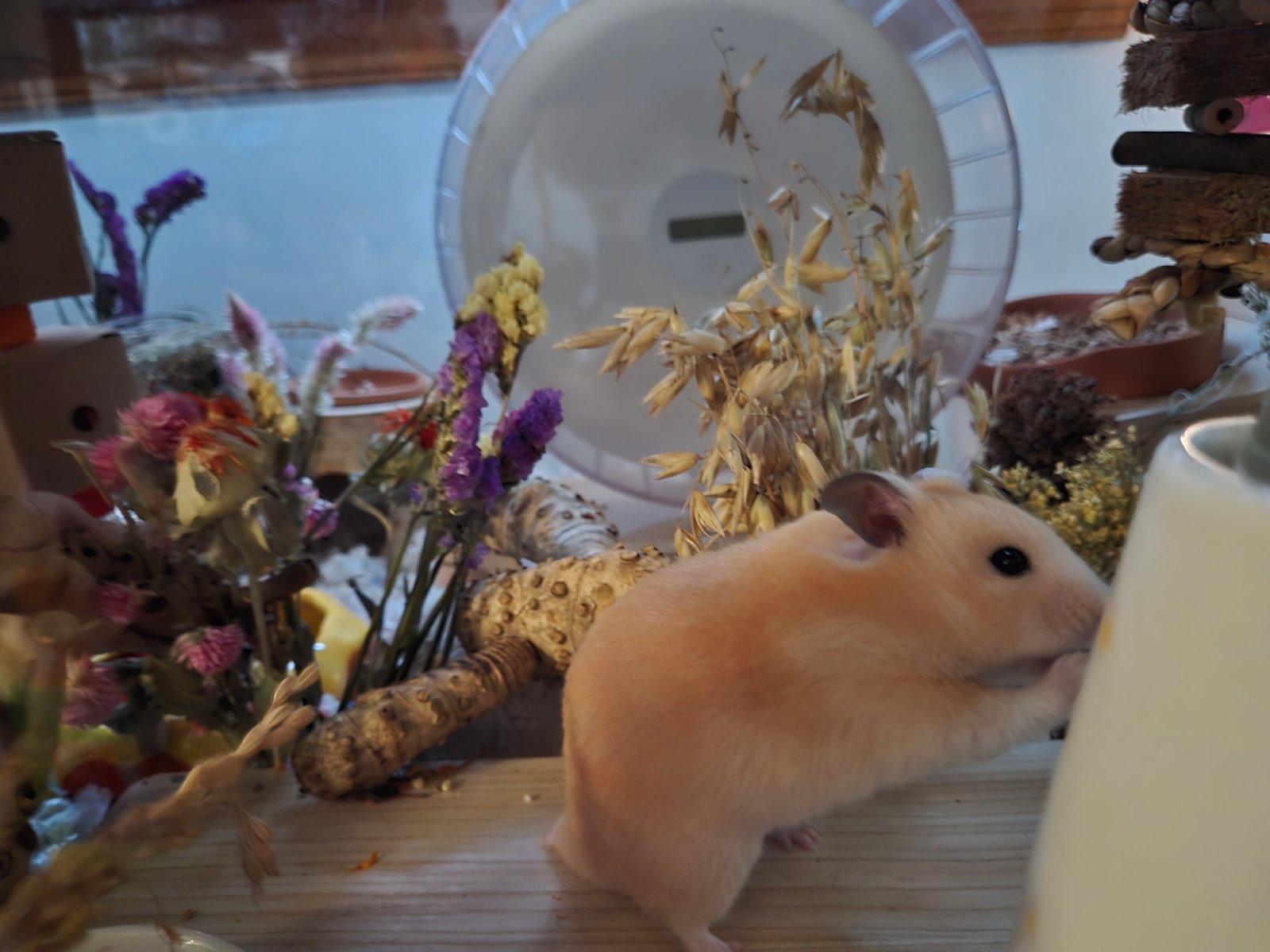
ENRICHMENT
Hamster enrichment is all about giving your hamster a safe, engaging environment that lets them explore, forage, dig, chew, and express their natural behaviors. The right enrichment not only keeps them physically active, but also reduces stress, prevents boredom, and supports their overall wellbeing.
Enrichment Ideas
DIY Enrichment
DIY enrichment is a great way to provide variety while keeping hamster care affordable and customizable. Simple, safe household materials like cardboard, paper, and untreated wood can be turned into tunnels, foraging toys, and hides that encourage problem-solving and exploration. Rotating DIY items regularly keeps the enclosure interesting and allows you to tailor enrichment to your hamster’s individual preferences, all while prioritizing safety and natural behaviors.
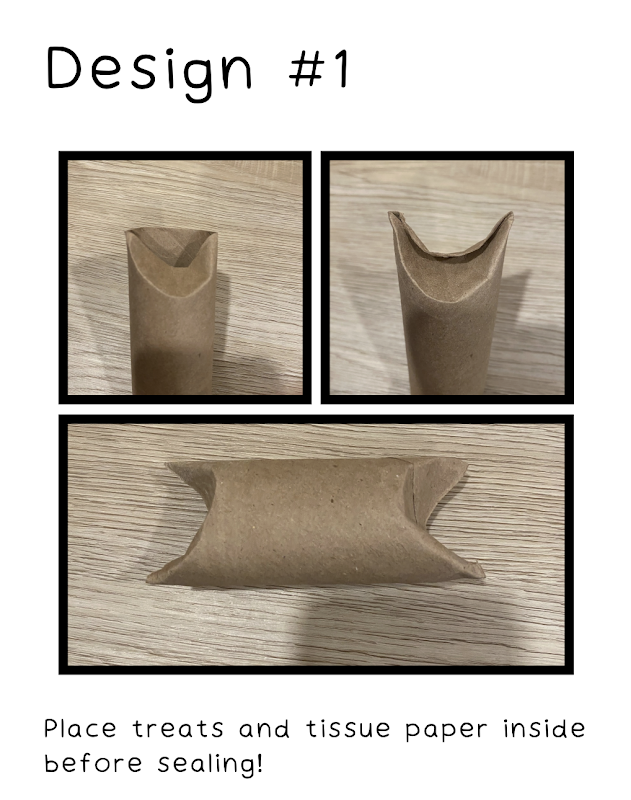
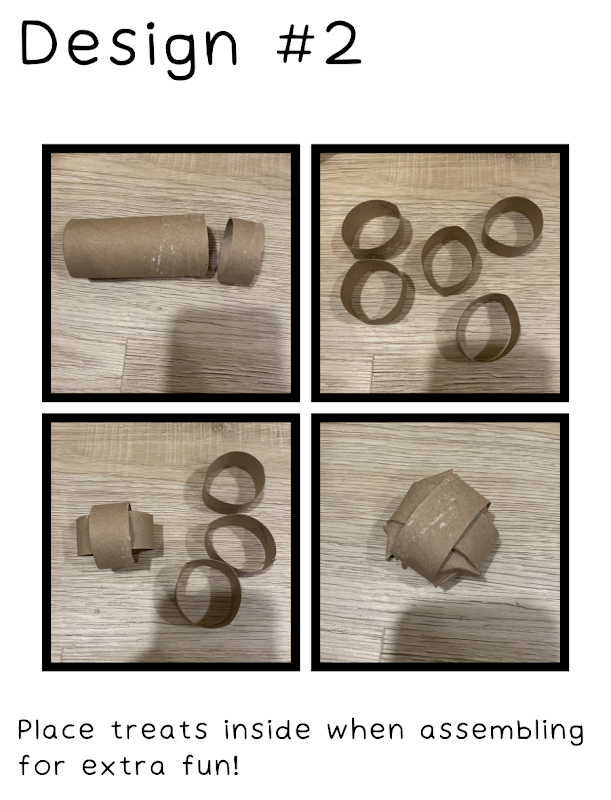
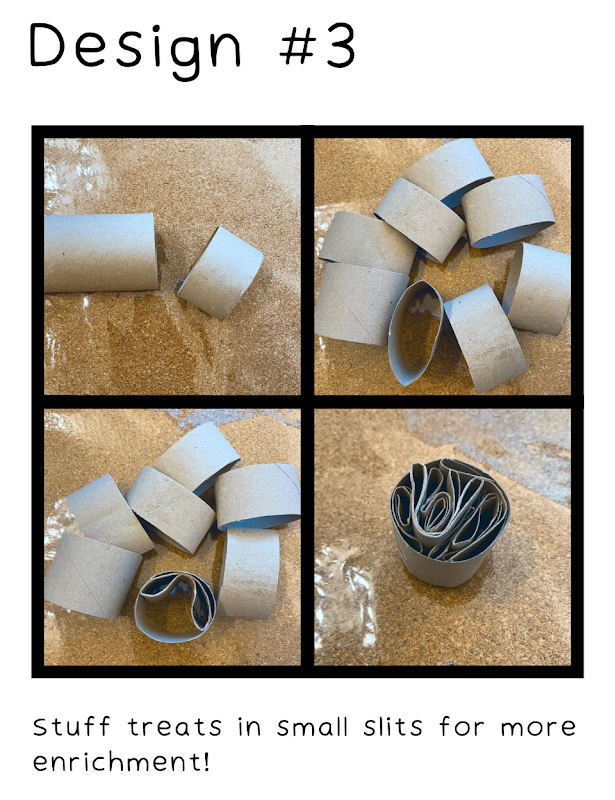
Toilet paper rolls can be made into enrichment toys that are not only cost-effective but also versatile! With these DIYS, your imagination is the limit. Combine with natural tissue paper to add layers of complexity. See below for some examples, or create your own design!
Another enriching DIY you can make for your hamster is seed chews! Use a safe water/flour mixture as a “glue” to bind seeds, treats, or seed mix to natural wooden chews. Allow them to dry and harden before feeding, forming a fun chew toy and boredom breaker combo!
Passive Enrichment
Passive enrichment, such as varied substrates and thoughtfully chosen accessories, is especially important for hamsters because it supports natural behaviors without requiring constant interaction from the animal or the owner. Deep bedding encourages burrowing, different textures promote exploration, and permanent accessories like tunnels, hides, and platforms create a complex environment that feels secure and stimulating. This type of enrichment allows hamsters to make choices, establish routines, and interact with their space in ways that closely mirror how they would behave in the wild.
Various substrates such as corn cob, hemp chips, hay, cork granules, sphagnum moss, and coco coir, in addition to the primary paper or wood-shaving bedding, can provide opportunities for hamsters to dig and explore. These substrates offer enrichment in the form of differing textures, even if they may not be able to hold burrows, and can be contained in glass or plastic containers or in sectioned-off regions of the enclosure. Before purchasing additional substrates, be sure to confirm that the material is hamster-safe.
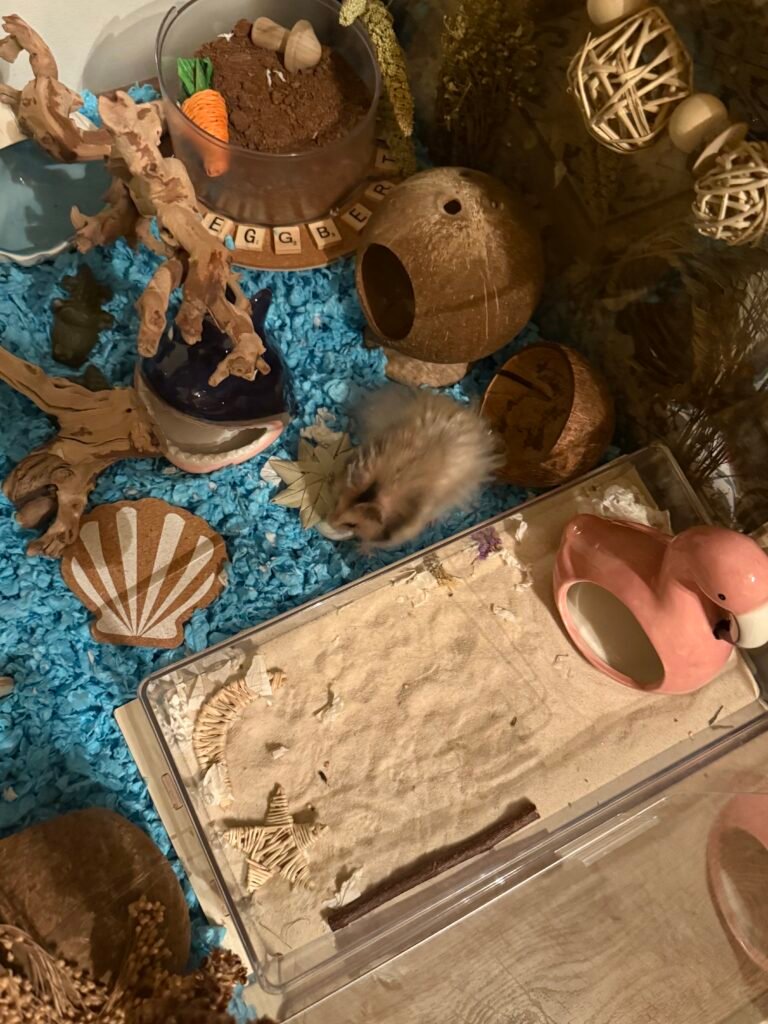
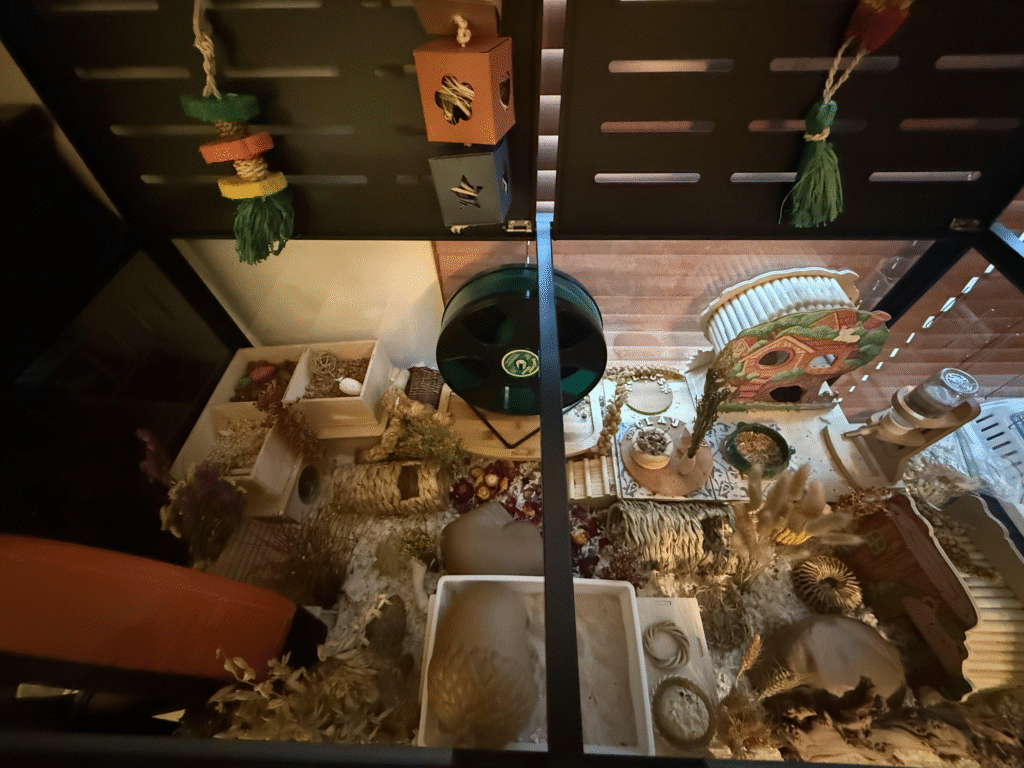
Logs, tunnels, platforms, and bridges provide passive enrichment as a hamster is able to access different levels as they move across the enclosure. They can also serve as burrow-starters when buried under bedding, especially useful for hamsters who are reluctant to burrow on their own.
Food Based Enrichment
Food-based enrichment, such as sprays and scatter feeding, taps into a hamster’s natural foraging instincts and turns mealtime into an engaging activity. Searching for seeds, stripping sprays, and collecting food encourages movement, mental stimulation, and natural behaviors that bowls alone can’t provide. This type of enrichment helps prevent boredom, promotes a healthier activity level, and gives hamsters the opportunity to interact with their environment in a meaningful, species-appropriate way.
“Scatter-feeding” refers to the practice of scattering a hamster’s food or seed mix around the enclosure rather than depositing it in a food bowl during feeding time. This practice is highly recommended as a way to “slow feed” your pet and encourage them to explore and use more of their enclosure! However, for elderly, disabled, or ill hamsters, it may be easier to bowl-feed to ensure they can reliably access their food. It’s also hard to track exactly how much food your hamster is eating when scatter-feeding.
Sprays and dried herbs help provide additional enrichment, requiring pets to hunt for and gather their food. Herbs should be all-natural and can be scattered around the enclosure in pinch-sized amounts, while sprays (dried seed stalks) can be inserted into bedding to appear as if they are growing out of the substrate. Common herbs include leaves and petals of plants non-toxic to hamsters, such as raspberry leaves, rose petals, chamomile, calendula, and hibiscus. Common sprays include millet, oat, wheat, and flax. Both sprays and herbs should be provided in limited quantities and refreshed periodically. Check out hamster small businesses on Etsy and Instagram for specialty supplies of these items.


In addition to a complete rodent lab block, supplemental feed in the form of a seed mix can add variety to a hamster’s diet. Seed mixes can also encourage foraging behaviors when combined with scatter-feeding. However, note that selective feeding may occur on a seed mix-only diet, so NAHA recommends the use of a complete lab block as a base.